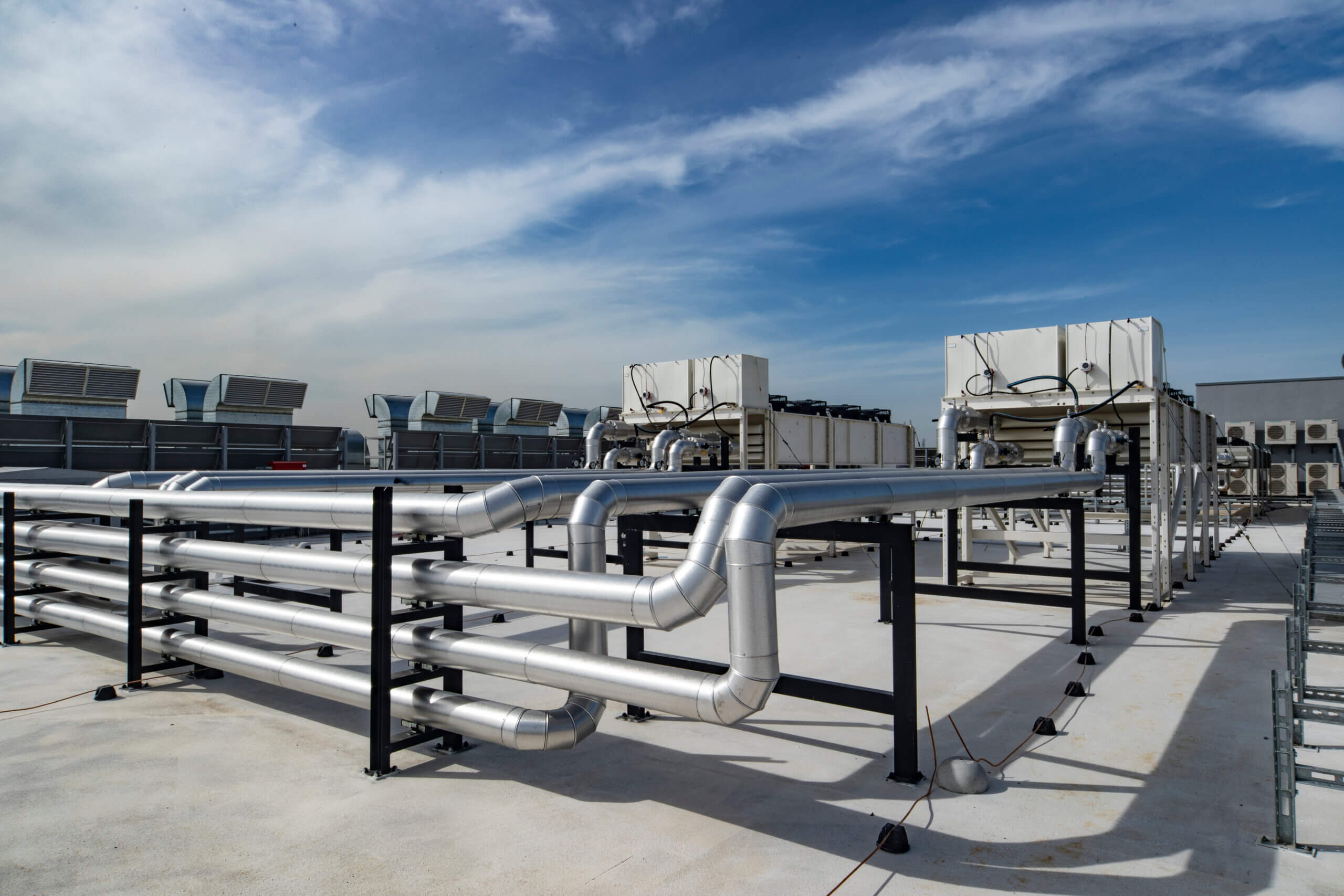
Investment in data center infrastructure is estimated by multiple sources to reach approximately $7 trillion by 2030. Another impressive figure: in 2026, data centers account for roughly 90% of all spending in the US “office” construction category. As AI technology continues to proliferate and other big data needs grow, it’s safe to say that these facilities are the focal point of the current construction industry.
Liquid cooling technology is quickly becoming the standard. With that, builders and contractors face a unique structural challenge, one that’s often overlooked in the planning stages: the long-term effect of water effluent on concrete substructures.
Direct liquid cooling (DLC), immersion cooling, and rear-door heat exchangers are the major utilizations which are now standard in virtually any facility designed to handle modern GPU-intensive workloads.
All are systems that move enormous volumes of water through closed and semi-closed loops running throughout the facility. When those systems perform perfectly, there’s no problem. But in the real world leaks occur, condensation accumulates, and effluent reaches the most vulnerable structural elements in the building.
Looking for a quick overview of data center waterproofing?
Take a look at the Hycrete Data Center Brochure.
Why Data Centers Need Integral Waterproofing and Corrosion Protection
Cooling water in data center systems is chemically complex. As water cycles through cooling towers and closed loops, dissolved minerals concentrate over time: calcium, magnesium, chlorides, and silicates. High total dissolved solids (TDS), sulfates, and chloride concentrations create a corrosive chemical environment.
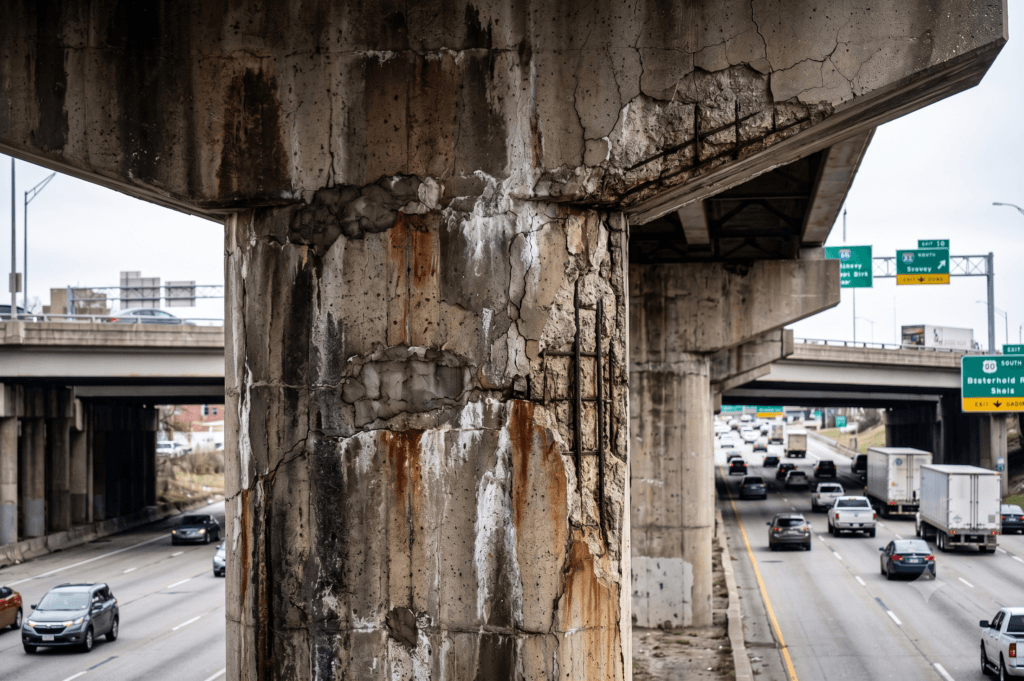
When this water contacts untreated concrete, damage compounds quickly: sulfate attack degrades the cement matrix, while chlorides penetrate to embedded rebar and trigger electrochemical corrosion. Once reinforcing steel begins to corrode, the corrosion itself expands and cracks the surrounding concrete from the inside out.
The consequences can range from cosmetic at first, to serious structural damage over time. Unfortunately, structural degradation in a below-grade mechanical room or cooling plant foundation doesn’t manifest visibly until damage is already extensive. By then, remediation is costly, disruptive, and even dangerous in an operating data center.
Of course, below-grade structures face additional risk from hydrostatic pressure, which forces groundwater through any available capillary path. When cooling system effluent is added to that equation, the cumulative moisture load on untreated concrete becomes significant.
Standard Waterproofing Falls Short for High-Cost Data Center Projects
Many contractors default to applied membranes for below-grade waterproofing. Sheet membranes and fluid-applied coatings can perform adequately only when perfectly installed. Pipe penetrations, conduit sleeves, and construction joints all create vulnerable points that cause membranes to fail.
Typical data center environments pose a major challenge for membranes: mechanical systems are dense, requiring numerous below-grade penetrations. A single failed membrane detail within any of these features can allow water effluent to contact structural concrete continuously for years before becoming visible.
Membrane systems also introduce scheduling dependencies that complicate fast-track construction timelines: weather windows, cure times, and a separate trade to coordinate around critical pour schedules. For data center projects where schedule compression is a constant pressure, that complexity carries real cost.
Which is why more and more data center projects are turning to concrete admixture technology. But not all admixtures are created equal…particularly when you’re talking about hydrophobic vs. hydrophilic admixture technology.
Integral Protection: Preserving Substructures from the Inside Out
Hycrete takes a fundamentally different approach. Rather than wrapping concrete in a surface layer that can be compromised, Hycrete’s admixtures protect from within the concrete matrix itself.
Hycrete is a hydrophobic liquid admixture that, when introduced at the batch plant, forms a performance co-polymer throughout the pore structure of the concrete. This co-polymer fills the capillary network and makes the material virtually non-porous. Cooling system effluent, dissolved salts, and aggressive chemicals are stopped at the surface. There is no membrane to puncture, no seam to fail, and no joint to detail incorrectly.
Waterproofing is only half the picture. Hycrete simultaneously reacts with metallic ions in cement and rebar during curing, forming a protective coating around steel reinforcement elements. This dual-action chemistry addresses water ingress and the corrosion mechanism together to deliver permanent protection that requires no re-application over the life of the structure.
Building Resilience for the Future of Big Data
The data centers being built today are designed to operate for decades. The liquid cooling systems they house will evolve, expand, and be retrofitted multiple times over. Each upgrade cycle increases the likelihood of water effluent contact with structural concrete.
Building with Hycrete means the substructure is protected on day one…and every day after that. For contractors delivering facilities where downtime is never an option, that isn’t just a specification upgrade. It’s the right way to build.