Many professionals throughout the built environment are mostly concerned with concrete waterproofing; however, proper corrosion protection is equally important. Corrosion of reinforced concrete is the silent threat that essentially puts an expiration date on durability, structural strength, and service life.
For engineers, builders, and owners concerned with structural longevity (not to mention their long-term ROIs…), the various risks of corrosion cannot be ignored. By adopting an integrated protection strategy at the mix design stage, you won’t have to worry about reacting to spalls and cracks, performing costly maintenance in a failing attempt to keep corrosion and damage at bay. With the dual-action waterproofing and corrosion protection of Hycrete admixtures, true durability begins before any cracks ever appear.
What Happens Inside Concrete When Rebar Rusts and Corrodes?
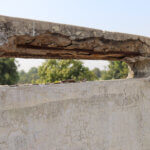
When steel elements within the concrete structure corrode, the resulting rust expands and creates internal tensile stresses which can lead to cracks, delamination, or spalling. Essentially the structure starts to break down from outside and from within.
- Section Loss and Resulting Load Capacity Reduction: As the steel rebar rusts, the metallic iron converts to iron oxide, i.e. conventional rust. This corrosion process basically consumes the rebar, leading to a direct and irreversible reduction in the steel’s cross-sectional area. Unsurprisingly, any loss of structural steel diminishes the rebar’s ability to carry the tensile loads it was designed for. The overall load-bearing capacity of the concrete is fundamentally compromised, and can even potentially fall out of specification.
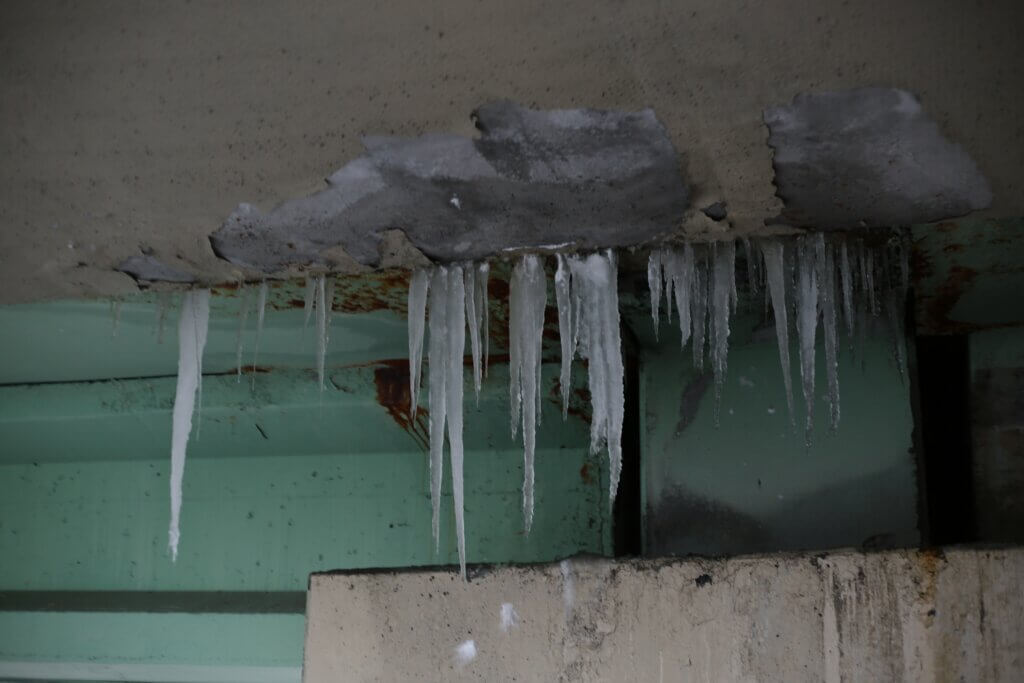
- Internal Expansion and Spalling: Iron oxide can occupy up to six times the volume of the original steel. This volumetric expansion creates immense internal pressure on the surrounding concrete, known as delamination stress. This stress is far greater than the tensile strength of the concrete cover, causing internal cracking that manifests externally as widespread cracking, scaling, and eventual spalling (fragmentation and breaking off of the concrete cover).
- Compromised Bond Strength: Spalling exposes the reinforcing steel, accelerating the corrosion rate. Even before spalling occurs, the rust-induced micro-cracking at the steel-concrete interface weakens the bond between the two materials. This loss of bond strength further reduces the ability of the structure to transfer stress effectively, accelerating the decay of the composite strength.
Preventing the issue at the source, Hycrete protects steel by forming a protective passivating layer on the surface of reinforcement steel. Substantially reducing corrosion initiation / propagation in addition to water ingress, Hycrete is a dual-action corrosion-inhibiting technology that meets ASTM C1582 requirements.
The Three Major Causes of Reinforced Concrete Corrosion:
1. Chloride-Induced Corrosion: Chloride ions penetrate concrete’s porous structure and attack embedded steel reinforcement, initiating corrosion. This is especially common in coastal environments and regions exposed to de-icing salts. Once chlorides reach the rebar, they break down the passive oxide layer that protects the steel, leading to expansive rust formation and cracking. Effective prevention begins with limiting moisture and chloride ingress throughout the concrete matrix, not simply at the surface.
2. Carbonation: Carbonation occurs when carbon dioxide reacts with calcium hydroxide in concrete, producing calcium carbonate and lowering the pH. As the concrete becomes more acidic, the steel’s protective passivation layer deteriorates, leaving reinforcement vulnerable to corrosion. The process progresses slowly but steadily, particularly in structures with thin cover or higher permeability.
3. Alkali-Silica Reaction: Certain reactive aggregates can interact with alkalis in cement paste to form an expansive gel that absorbs water and swells. Over time, this expansion generates internal stress, causing cracking, spalling, and long-term durability loss. ASR damage often appears as irregular surface cracking and can compound the effects of other deterioration mechanisms.
Learn more in our previous article on Understanding Reinforced Concrete Corrosion.
Complete Waterproofing and Protection for Steel-Reinforced Concrete
Hycrete is an innovative American manufacturer founded in 2003. Our mission is to help the construction industry build better, more sustainable structures through the engineering of better concrete materials. Backed by more than two decades of experience and thousands of successful projects worldwide, Hycrete has become the scientifically proven gold standard for concrete waterproofing and corrosion protection.